Health & Safety Policy for Commercial Waste Collection London
 Purpose: This Health and Safety policy sets out the approach, standards and responsibilities that govern safe operations for commercial waste collection activities. It applies to all personnel, contractors and visitors involved in business refuse removal, recycling and transfer services across our operational area. The aim is to prevent harm, reduce risk and maintain a safe working environment while delivering efficient commercial waste collection London services.
Scope and application
The policy covers routine collections, vehicle loading and unloading, depot operations, container maintenance and special collections such as hazardous or regulated waste. It applies to drivers, loaders, technicians, depot staff, supervisors and any third parties engaged in London commercial waste collection. Everyone engaged in these operations must understand their duties and the controls in place to manage health and safety risks.
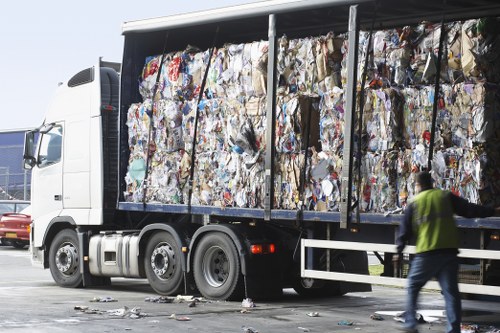 Responsibilities: Management is responsible for providing safe systems of work, ensuring legal compliance, and allocating sufficient resources for training, equipment and monitoring. Supervisors must implement this policy on a day-to-day basis. Employees and contractors are responsible for following instructions, reporting hazards and cooperating with safety procedures. Strong leadership and personal accountability underpin safe commercial waste services in the city.
Risk assessment and control measures
All operational activities must be supported by documented risk assessments. These assessments identify hazards such as manual handling, vehicle movements, traffic interaction, exposure to sharps, chemical spills and confined space risks within containers or compactors. Controls follow the hierarchy of risk reduction: elimination, substitution, engineering controls, administrative controls and personal protective equipment (PPE).
Safe systems of work
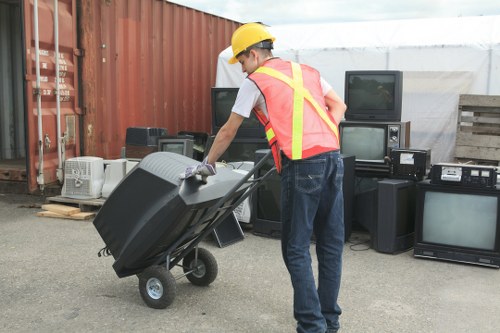
Working procedures include permitted loading limits, safe lifting techniques, segregation of hazardous materials, secure stowage of bins and load restraint on vehicles. Operators should use mechanical aids where possible and avoid unnecessary manual handling. Daily vehicle checks, route risk briefings and pre-shift toolbox talks ensure teams are prepared and aware of site-specific hazards for each commercial waste collection route.Equipment maintenance and inspection regimes are essential. Vehicles, lifts, compactors and lifting attachments must be inspected at defined intervals and kept in serviceable condition. Faults are reported immediately and vehicles are not used if defects compromise safety. Contractors supplying equipment must provide evidence of maintenance records and conformity with safety standards.
Training and competence are critical. All operatives receive induction training, job-specific instruction and refresher courses. Topics include manual handling, traffic management, use of PPE, hazardous waste handling and emergency procedures. Supervisors receive additional training in risk assessment, incident investigation and leadership. A documented competency matrix ensures only trained staff undertake specified tasks within the commercial waste sector.
 Personal protective equipment and welfare: Appropriate PPE — high-visibility clothing, gloves, steel-toe footwear and eye protection — must be worn where risks exist. Additional specialized PPE may be required for chemical or sharp waste handling. Welfare arrangements include access to clean water, handwashing facilities and rest breaks to minimize fatigue during prolonged collection shifts.
Emergency procedures and incident reporting: Clear procedures address road traffic collisions, spills, exposures and medical emergencies. Employees must report incidents and near misses immediately so that corrective actions are taken and lessons are learned. Incident investigation identifies root causes and drives improvements to the safety management of commercial waste collection London services.
Traffic management and public safety are priorities. Routes are planned to reduce unnecessary reversing and interaction with pedestrians. Banksmen or mobile CCTV are used where reversing cannot be avoided. Loading and unloading must be conducted in designated safe zones wherever possible, and temporary barriers or cones deployed when operations take place near public footways.
![A close-up view of a pile of numerous used aluminium beverage cans, primarily silver in colour with some showing red and green accents from branding, tightly packed together. The cans display various tab positions, with some open and others closed, and feature smooth, reflective metallic surfaces with subtle ridges around their sides. The background consists entirely of more cans, filling the frame and creating a dense, textured surface. Superimposed over the cans is a green recycling symbol composed of three arrows forming a triangle, emphasizing environmental awareness. The image is set outdoors, likely on a pavement or roadside area, and is lit evenly with natural daylight, highlighting the reflective quality of the aluminium. This visual context aligns with rubbish and waste management services provided by Commercial Waste Collection London, who handle waste collection including recyclable metals in the capital's urban environment near [POSTCODE] and [TOWN].](/pub/_photos/rubbish/f3388719104.jpg)
Monitoring, audit and continual improvement
Safety performance is monitored through regular inspections, audits and performance indicators such as incident rates and near-miss reports. Findings inform corrective actions and training priorities. Management reviews the policy and performance at defined intervals to ensure it remains effective and current with operational changes or emerging risks to commercial refuse collection teams.Implementation and commitment: All staff are required to actively support this policy and take reasonable care for their own safety and that of others. The organisation commits to providing the resources necessary to implement the policy, including competent personnel, suitable equipment and an open reporting culture. This policy is an integral part of delivering reliable and safe commercial waste services in London and contributes to safeguarding employees, contractors and the public while maintaining operational continuity.
- Key controls: Risk assessments, training, equipment maintenance, PPE, traffic management, emergency planning.
- Operational priorities: Prevent injury, protect public safety, ensure legal compliance and promote continual improvement.
- Review: Policy reviewed periodically and after significant incidents or operational changes.