Commercial Waste Collection in London

Commercial waste collection in London needs to be practical, tidy and suited to the way your premises actually operate. We provide a service focused on the removal of business rubbish from shops, offices, hospitality venues, studios, managed properties and other commercial sites across the city. The aim is straightforward: keep waste moving out of the way, support compliant handling, and help you maintain a cleaner working environment without adding avoidable disruption to the day.
Our work covers recurring collections and one-off clearances where business waste has built up faster than expected. The most common loads include mixed rubbish, packaging, office disposals, redundant fittings and general non-hazardous commercial waste. We also support customers who need a more structured approach to separating materials for reuse or recycling. If you are comparing options, this page sets out the main service and the related choices so you can decide what fits your site best. Use the service details below to judge scope, access needs and the most suitable next step.
For a commercial collection that suits your schedule and premises, start with a clear description of what needs taking away. If you already know the kind of waste involved, that is usually enough to begin a useful conversation. Request a quotation when you are ready, or keep reading to see how the service is typically shaped around different kinds of business waste.
Business Waste Removal for Day-to-Day Operations
Business waste removal is often about steady, manageable clearance rather than dramatic upheaval. Many premises generate small but regular amounts of rubbish from deliveries, storage areas, customer activity and back-of-house operations. A sensible collection plan prevents bins from becoming overloaded and reduces the need for staff to spend time shifting waste around the building. It also makes it easier to keep circulation areas, service yards and loading points usable.
We handle a broad range of everyday commercial waste, including cardboard, shrink wrap, office paper, broken display items, packaging, and non-hazardous refuse from routine trading. Where materials are suited to recycling, separating them at source can make collections simpler and clearer. The right arrangement depends on the volume, the type of waste and how quickly it accumulates, so the service is best shaped around the actual mix on site rather than a one-size-fits-all approach.
Useful starting points for business collections often include:
- mixed general rubbish from trading areas
- cardboard and packaging from stock deliveries
- office waste from desks, stores and print areas
- light equipment and worn fittings
- sorted recyclable material where separation is practical
Supported Commercial Collection Types
![A black rubbish bag filled with transparent plastic bottles is situated on a green grassy surface, with some bottles spilling out of the top of the bag. The plastic bottles are of varying sizes, mostly clear with some blue caps visible, and appear to be discarded beverage containers. The bag is partially wrinkled and looks full, with a few bottles lying on the grass next to it. The scene is outdoors, in a natural environment, likely on a lawn or a garden area, with sunlight illuminating the scene. The image highlights general waste disposal, relevant to rubbish removal services such as those provided by Commercial Waste Collection London, serving the London area and its surrounding boroughs including [POSTCODE] and [TOWN].](/pub/_photos/rubbish/f1390534656.jpg)
Different businesses produce different waste streams, and the service works best when those differences are respected. An office may need removal of obsolete furniture, filing and equipment, while a retail unit may need packaging and display materials shifted quickly after a refurbishment. A hospitality venue may create a combination of food-related waste containers, back-of-house refuse and redundant fixtures. Commercial waste collection should therefore be planned with the premises, the access route and the disposal mix in mind.
If your waste is bulky rather than simply numerous, a commercial collection can still be arranged around what needs to go. Redundant shelving, office cabinets, seating, counters and other non-hazardous items can often be grouped into a single visit if access allows. Where items are awkward to move, it helps to describe whether they are dismantled, stacked, bagged or stored in a specific location. That level of detail supports a smoother load-out and a clearer quotation.
Commercial waste collection works alongside our wider commercial waste disposal service, which is useful when the priority is not just taking items away but ensuring they are handled through the right disposal route. The distinction matters where you want a cleaner process for mixed loads, recyclable materials or office clearances that include more than one type of waste.
Office Waste and Workplace Clearance
Offices tend to generate waste in layers: daily rubbish, recurring paper waste, and occasional clear-outs of furniture, electronics or stored materials. A commercial waste collection for office settings should take account of the building layout, lift access, loading restrictions and the need to avoid interrupting staff or visitors. The practical task is to clear what is no longer needed while keeping the remainder of the workplace organised and safe to use.
Office waste removal can include the collection of desks, chairs, filing cabinets, shelving, monitors, redundant peripherals and other non-hazardous items. Some businesses also need support when moving from paper-heavy storage toward a lighter, more digital setup. In those cases, removal can be scheduled to support phased changes rather than a single disruptive clear-out. Our approach is to keep the process measured and suitable for the building rather than forcing a hurried clearance.
Office clearance is a useful page to review if your commercial waste includes larger workplace items as well as routine rubbish. For businesses with several rooms or floors, a clearer plan helps, especially when waste is staged in different areas and needs to be gathered efficiently before collection. If you are comparing options, a simple inventory of furniture and waste types is usually enough to narrow the scope.
Bulky Waste, Furniture and Larger Items
Bulky commercial waste often needs a different approach from standard bagged rubbish. Larger items take more space, can be awkward around doorways, and may need careful handling through shared access points or narrow service corridors. That is why furniture and larger-item collection should be planned around the item size, the route out of the building and whether any partial dismantling is sensible before removal.
We regularly deal with business furniture and other large items that are no longer required after a refit, relocation or change of use. This can include seating, desks, display units, tables and mixed office furnishings. In some cases, a business may only need a few larger pieces removed; in others, the work may form part of a broader clearance of storage or workspace. The service is intended to be flexible enough to handle both patterns without overcomplicating the job.
Furniture removal and collection is helpful where the waste stream is dominated by moveable furnishings rather than loose rubbish. If the items are mixed with general refuse, the overall collection may still be combined, but separating the categories in your enquiry makes it easier to agree the most suitable approach. That kind of clarity is especially useful for premises with limited access or shared entrances.
Clearance for Storage Areas, Back Rooms and Plant Spaces

Commercial premises often store waste in places that are out of the public eye: back rooms, basements, plant spaces, loft-style storage, cupboards and service areas. These spaces can accumulate broken stock, packaging, redundant equipment and miscellaneous items that no longer have a clear purpose. A useful commercial collection service takes those stored materials seriously, rather than treating them as an afterthought.
When a storage area has become crowded, the main decision is whether the collection is a straightforward removal of piled waste or a more organised clearance with sorting. Some businesses want items moved as found, while others prefer recyclable material separated from general rubbish. Access matters too. Stairs, narrow doors, parking constraints and building rules all shape how the work is done. Clear information at the outset helps the collection proceed without avoidable delays.
Garage clearance and loft clearance pages can be useful references when a commercial site uses similar storage spaces for surplus stock, old fittings or seasonal materials. The setting may differ, but the principle is similar: remove what is no longer needed and leave the area in a better state for the next use. If your waste is spread across several rooms, a short list of locations is often enough to get the scope right.
Waste Streams, Recycling and Separation
Not every load should be treated in the same way. Commercial waste often contains a mix of materials, and the more clearly those are separated, the easier it is to manage the collection responsibly. Cardboard, paper, metal, certain plastics and reusable fittings may all need different handling from general rubbish. A practical collection service should therefore support sensible separation without making the process cumbersome for staff.
Recycling and sustainability matters because commercial customers often want a clearer route for material that still has value as a resource. That does not mean every item can be recycled, and it does not mean every site is set up for sorting. It does mean there is value in checking what can be grouped together, what should stay separate and whether any items need different disposal arrangements. The result is usually a more efficient collection and less waste sent to the wrong place.
For some businesses, the main benefit is simply consistency. Waste that is sorted in the same way each time is easier to remove and easier to account for. For others, the aim is to reduce clutter after a refurbishment or stock change. Either way, the collection can be planned around the actual material mix rather than a generic assumption about what businesses throw away.
Commercial Waste Clearance for Refits and Changes
When a business refits a unit, refreshes a workspace or changes its layout, waste often appears in bursts. Items are removed from use faster than new arrangements are confirmed, and storage can quickly fill with packaging, offcuts, broken fittings and redundant furniture. Commercial waste clearance in these situations needs to be organised around the pace of the project and the constraints of the building, not just around the volume of rubbish.
That is where it helps to distinguish between routine waste and project-related clearance. A refit may involve display units, counters, shelving, partitions or other items that are no longer needed once the new layout is planned. Some jobs can be handled in one collection; others are better split into stages so the site remains workable. Our role is to remove the waste that is ready to go, keeping the rest of the process as simple as possible.
Builders waste clearance may be relevant where the work includes strips, offcuts or refurbishment debris rather than ordinary office or retail rubbish. If the load includes mixed materials, describing the main categories in plain terms is often enough. A clear note about access, floor level and item type can make the quotation more accurate and the collection easier to plan.
About London
London is a large, historically layered capital city on the River Thames, with a landscape shaped by centuries of growth, redevelopment and changing patterns of movement. The city stretches far beyond its core, but many of its best-known districts still reflect older settlement patterns, river crossings and transport routes that helped define its expansion. Westminster and the City remain central to its civic and financial identity, while places such as Southwark, Lambeth, Tower Hamlets and Camden each contribute distinct urban character. London’s street pattern is famously varied: medieval lanes sit beside Georgian terraces, Victorian commercial streets, post-war estates and contemporary tower blocks. The result is a city where architectural styles often stand side by side within a few minutes’ walk. The Thames continues to act as a strong organising feature, crossed by a dense network of bridges and embankments, while parks such as Hyde Park, Regent’s Park and Hampstead Heath provide broad open space within the urban fabric. Museums, theatres, markets, galleries and concert venues give the city a strong cultural rhythm, and neighbourhoods such as Soho, Shoreditch, Notting Hill and Greenwich are each associated with different forms of trade, leisure and identity. London’s borough structure also gives it a strong local dimension: areas can feel like distinct towns while remaining part of a single metropolitan whole. Rail, Underground and bus networks connect these districts, yet the city still rewards close observation because so much of its history survives in streets, squares, churches, civic buildings and riverside landmarks. As a capital, it is both administrative and symbolic, but it is also a place of ordinary daily life, with markets, schools, workshops, offices and homes woven into a dense and continuously evolving urban environment.
Pricing, Access and Job Details
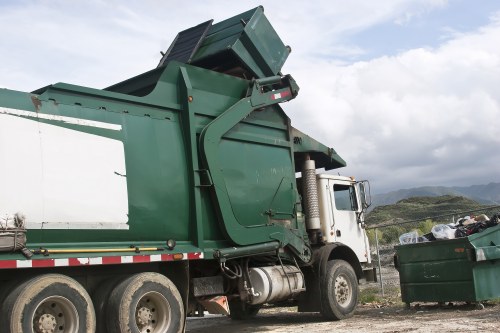
Commercial waste collection prices are usually shaped by a few practical factors rather than by a single fixed rule. The amount of waste, the type of material, the ease of access and the time needed to load everything all influence the final quotation. If items are bulky, spread across several floors or mixed with lighter rubbish, the job may take more handling than a simple ground-floor collection. That is why accurate descriptions are helpful from the start.
When preparing a quotation, it is sensible to note what needs removing, where it is located and whether there are any access points that matter, such as service lifts, restricted parking or timed building entry. You do not need a perfect inventory, but a clear summary improves the usefulness of the estimate. If a business is unsure how to describe the waste, a short written list is usually enough to begin with. The key is to provide enough detail for the scope to be understood without turning the enquiry into a lengthy task.
Pricing and quotes is the most relevant page when you want to discuss the likely cost of a commercial collection in more detail. If you are ready to move ahead, a plain description of the waste and the premises is the best starting point. For a quicker response, keep the wording direct and mention any materials that should be treated separately.
Commercial Waste Collection Areas and Service Choice
Commercial waste collection in London has to work across very different business environments, from busy high streets and office blocks to mixed-use streets, estates and managed developments. That is one reason the service is best understood as a set of practical choices rather than a single fixed routine. Some customers need regular removal of packaging and refuse; others need periodic clearance after a refurbishment or office change. The service should reflect the pace and layout of the premises.
Where recurring collections are appropriate, consistency is often the priority. Where one-off work is needed, the emphasis shifts to removing everything agreed within the site’s limits and leaving the area ready for its next use. Many commercial customers also need a balance between speed and sorting, especially when waste includes both rubbish and items with recycling value. Clear communication about the type of waste and the way it is stored is usually the most useful part of the process.
Commercial waste collection Westminster, Commercial waste collection Islington and Commercial waste collection Camden are examples of area pages that show how the service can be matched to different parts of the city. If your premises are elsewhere, the same main service can still apply; the location simply helps define the most suitable collection plan. Contact us when you are ready to request a quotation.
Commercial Waste Disposal for Mixed Loads
Sometimes a business does not need a plain collection alone, but a more complete disposal service that covers a mixed load from start to finish. That can apply after a store closure, a move, a storage reorganisation or a major tidy-up of back-of-house areas. In these cases, the job is less about handling one material stream and more about managing the mixture sensibly so the right items are separated and removed without unnecessary duplication.
The most helpful approach is to group related items before collection where possible. Mixed loads might contain office furniture, cardboard, general rubbish, worn fittings and a small amount of recyclable material. Not every piece needs to be sorted in advance, but a rough separation makes the work clearer and can reduce confusion on site. This is also where it helps to know whether anything is fragile, heavy or fixed in place, since those details affect how the collection is carried out.
Waste disposal and waste removal are both useful for commercial customers who want to understand the broader service options behind the collection itself. Those pages sit naturally alongside the main service because they describe the wider handling of unwanted material. If your business generates waste in several forms, it is often worth reviewing them alongside the more specific commercial collection pages before making an enquiry.
How to Prepare a Clear Enquiry
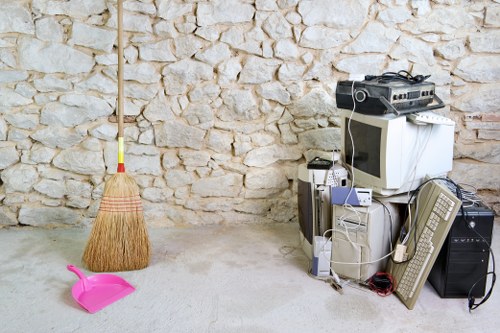
A good quotation enquiry does not need to be long, but it should be specific enough to describe the waste and the setting. A brief note of the main items, an estimate of volume, and any access issues is usually enough to begin. If the collection involves several rooms or a mix of business waste and larger items, listing those separately can help the scope feel more manageable. The purpose is to make the next step straightforward for both sides.
If your premises are busy, it is also worth thinking about the collection window and how the waste is staged. Items placed together in one accessible area are often easier to handle than materials scattered across different rooms. Where possible, keep heavier pieces apart from loose rubbish so the load is easier to understand. Keep the enquiry concise, but include the details that materially affect the work. That usually leads to a more useful quotation than vague language or a long backstory.
For a commercial waste collection in London, you can ask for a quotation in plain English and let the scope do the work. If you want to discuss a regular arrangement, a one-off clearance or a mixed business load, we are ready to help. Request your quotation today and tell us what needs removing.